Introduction
When working outdoors after sunset, reliable lighting can make a significant difference. Whether you are managing a railway yard, conducting a security patrol, inspecting a remote location or preparing for a power outage, choosing the right search light helps you see more clearly and work more efficiently.
However, not every search light is designed for the same purpose. Some models are suitable for everyday household use, while others are designed for long-range illumination, field operations and demanding working environments.
So, how do you choose the right one?
In this guide, we explain the most important factors to consider before purchasing a search light, including brightness, beam distance, battery performance, portability and practical applications.
1. Understand Your Lighting Requirements
Before comparing products, identify where and how you intend to use your search light.
Different environments require different lighting capabilities.
- Outdoor security and patrolling: Look for a focused beam, practical handling and sufficient illumination distance.
- Railway operations: Consider purpose-built signal torches, including tri-colour models where the application requires them.
- Industrial inspections: Prioritise dependable operation, comfortable handling and suitable illumination for the working environment.
- Emergency preparedness: A rechargeable search light can be useful during power cuts, evacuation situations and other emergencies.
- Remote locations and fieldwork: Consider battery capacity, charging options, portability and ease of use.
Choosing a light based on your actual requirements is generally more useful than simply buying the model with the highest advertised specifications.
2. Check Brightness and Beam Distance
Brightness and beam distance are two important specifications, but they measure different things.
Brightness, commonly expressed in lumens, indicates the total amount of visible light emitted by a source.
Beam distance describes how far the light reaches under specified testing conditions. It depends on factors such as the light output, reflector or lens design, beam focus and testing standard.
A high lumen rating does not automatically mean that a search light will illuminate distant objects effectively.
For example, a broad beam may be suitable for illuminating a nearby work area, while a more focused beam may be preferable when inspecting objects at a distance.
Before buying, check whether the manufacturer’s stated beam distance is supported by clear specifications and whether it matches your intended application.
3. Choose Between Rechargeable and Other Power Options
The power source affects convenience, operating costs and how you use your search light.
Rechargeable models are useful when the light will be used regularly and charging facilities are available. They can reduce dependence on disposable batteries, depending on the design and usage pattern.
When comparing rechargeable search lights, check:
- Battery capacity and stated runtime.
- Charging time and compatible charging method.
- Battery replacement or servicing options, where applicable.
- Whether the light supports different brightness modes.
- Charging requirements during extended field operations.
Remember that actual runtime can vary with brightness settings, battery condition, temperature and operating conditions.
If the search light is intended for emergency use, check its charge level periodically and recharge it according to the manufacturer’s instructions.
4. Consider Portability and Ease of Handling
A powerful light is only practical if it can be handled comfortably in the environment where it will be used.
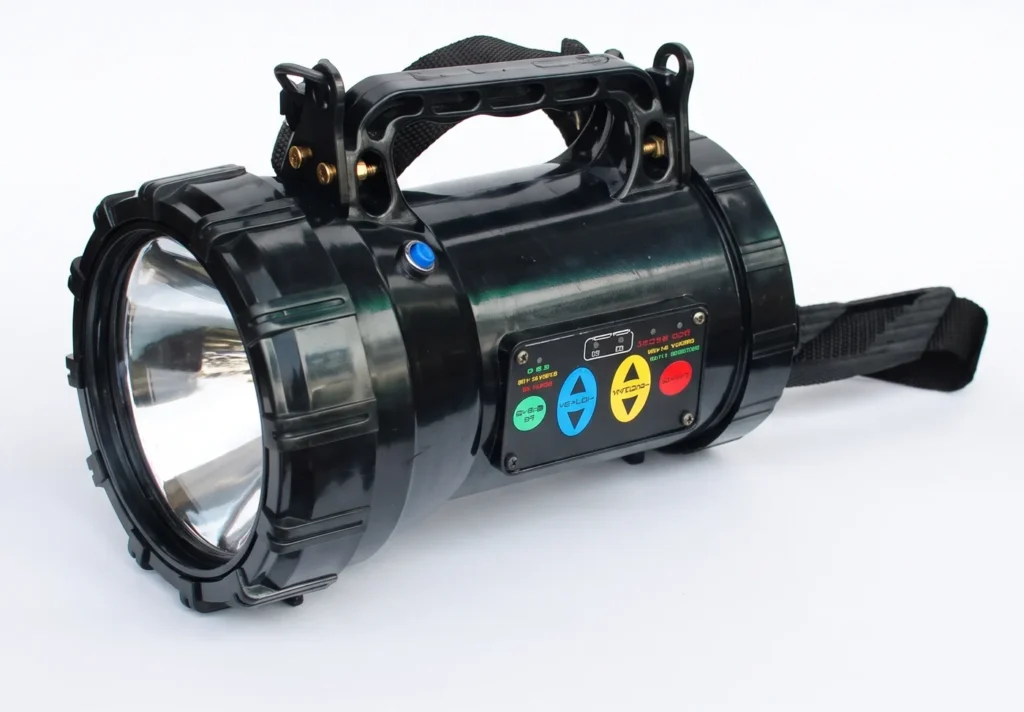
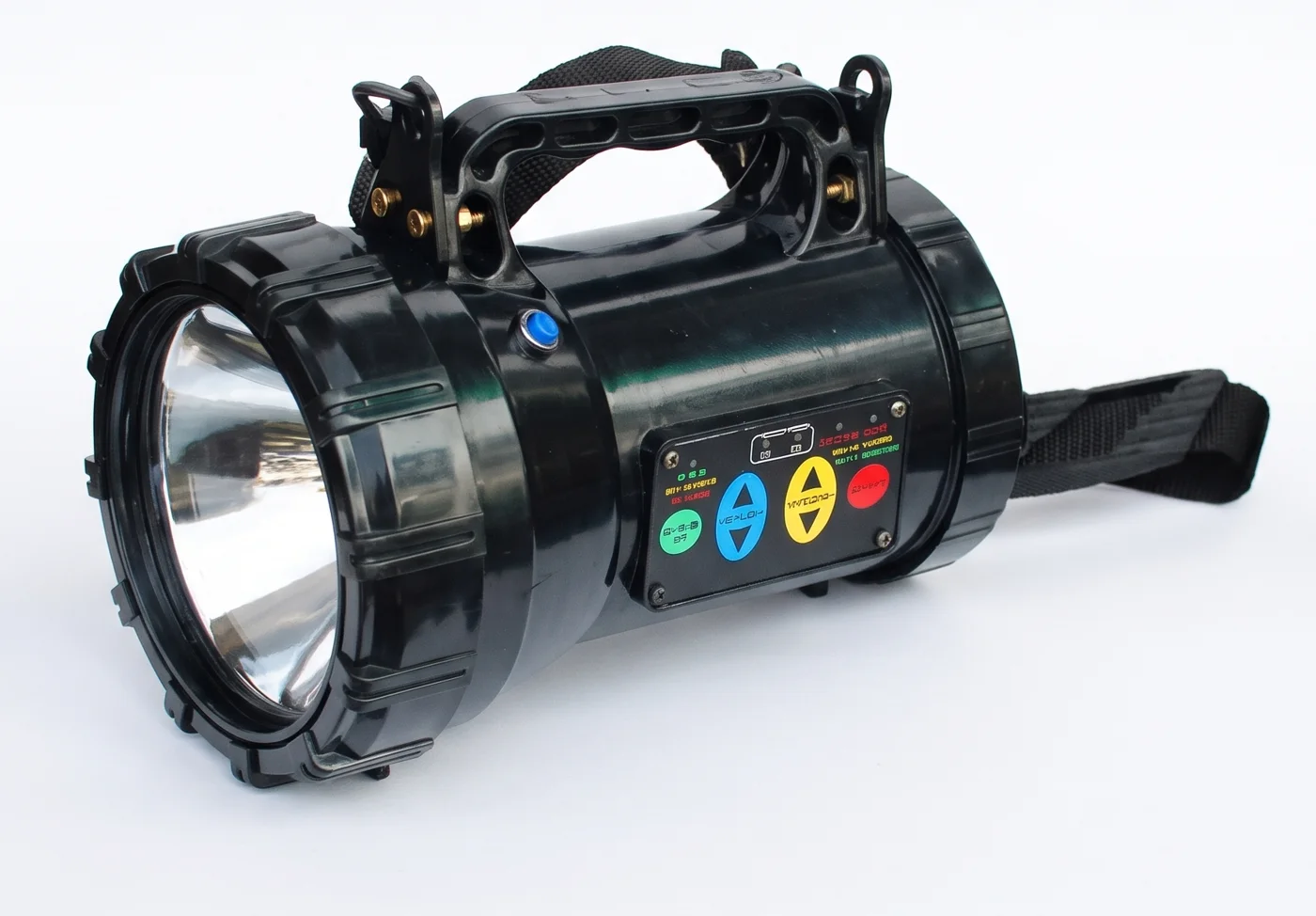
For fieldwork, outdoor inspections and security operations, consider the overall weight, handle design, shoulder strap, control placement and ease of carrying.
A portable search light with a shoulder strap may be convenient for users who need to move between locations while keeping their hands available for other tasks.
For stationary applications, such as illuminating a work area, a mounted or otherwise stable lighting solution may be more appropriate.
Think about how long you will carry the light, how frequently you will move and whether you need to operate it with gloves.
5. Look for Practical Operating Features
Additional features can improve usability, but their value depends on the intended application.
Some features worth evaluating include:
- Multiple lighting modes: Different brightness settings can help balance illumination and battery consumption.
- Focused illumination: Useful when the task requires seeing objects at a distance.
- Suitable construction: The enclosure should be appropriate for the dust, moisture and handling conditions expected during use.
- Convenient charging: A suitable charging arrangement makes regular use and maintenance easier.
- Easy controls: Clearly positioned switches and controls can help when operating the light at night.
Do not assume that every search light is waterproof, impact-resistant or suitable for hazardous environments. Check the product’s documented specifications before relying on it in demanding conditions.
6. Match the Search Light to Your Industry
The right lighting equipment depends on the task being performed.
Railways and Transport
Railway personnel may require specialised signal torches, including tri-colour lighting where specified by operational procedures. Search lights can also support inspections and general illumination in appropriate settings.
Signal equipment must meet the requirements of the relevant railway authority and intended application.
Police and Security
Security personnel may need portable, focused lighting for perimeter inspections, patrols and outdoor operations. Beam reach, handling comfort and reliable power are important considerations.
Industrial and Commercial Facilities
Warehouses, industrial premises and outdoor work sites may benefit from a combination of portable search lights, emergency lights and fixed lighting systems.
The appropriate solution depends on the size of the site, working conditions and the tasks being performed.
Homes and Emergency Preparedness
For households, a rechargeable search light can provide useful illumination during power outages, outdoor activities and unexpected emergencies.
For broader room illumination, dedicated emergency lights or lanterns may be more convenient than a tightly focused search light.
7. Compare Total Cost, Not Just the Purchase Price
The cheapest product is not necessarily the most economical over its useful life.
Before making a purchase, consider the initial price, battery replacement requirements, charging arrangements, expected usage frequency, maintenance and warranty coverage.
For institutional buyers and businesses, it is also worth checking product availability, invoice requirements, delivery timelines and after-sales support.
If you are purchasing several units, request a quotation that clearly specifies the model, quantity, applicable taxes, delivery charges and any custom requirements.
This makes it easier to compare suppliers on a like-for-like basis.
8. Why Buy from a Specialist Lighting Supplier?
When purchasing lighting equipment for operational or commercial use, access to the appropriate product range and clear specifications can simplify the selection process.
Jainsons Electronics offers a range of lighting and power-related products, including high-power search lights, rechargeable LED torches, railway signal torches, emergency lighting, batteries and solar products.
The company also supports bulk and institutional enquiries for buyers who need to evaluate equipment for specific applications.
Before placing an order, share your intended use, required quantity and any essential technical specifications so that the appropriate options can be evaluated.
Frequently Asked Questions
Which search light is best for outdoor use?
The best option depends on the distance you need to illuminate, operating duration, portability, weather exposure and power requirements. Compare documented specifications against your actual needs.
Is a rechargeable search light worth buying?
A rechargeable model can be a practical choice for frequent use when suitable charging facilities are available. Battery capacity, charging time and actual runtime should all be considered.
What is the difference between a torch and a search light?
A conventional torch is generally intended for handheld, everyday illumination. A search light is typically designed to produce a more concentrated beam for illuminating objects or areas at a greater distance. The exact performance varies by model.
How do I know whether a search light has a long beam range?
Check the manufacturer’s stated beam distance and the test conditions used to establish it. Compare this information with independent or clearly documented specifications where available.
Can businesses order search lights in bulk?
Yes. Jainsons Electronics accepts bulk and institutional enquiries. Buyers can contact the company to discuss quantities, product specifications, pricing and delivery requirements.
Conclusion
Choosing the right search light starts with understanding your application. Beam distance, brightness, battery performance, portability, construction and operating features all influence how well a product meets your requirements.
For railway operations, security work, industrial inspections or household emergency preparedness, compare the specifications carefully instead of relying on a single headline feature.
Looking for a search light for your specific application?
Explore the range of lighting solutions available at Jainsons Electronics or contact the team to discuss your product requirements and bulk enquiries.
Visit: jainsonselectronic.com
Contact: +91 92122 75189
Product suitability and specifications should always be confirmed before purchase.